


The United States is known for being a country of many ethnic backgrounds coming together to become a shared and diverse culture. However, in our short history, there has been a clear majority of culture and heritage. The preferences of this majority culture have been driving many of the economic, social, and policy decisions of the country. If the majority has shifted, shouldn’t the key drivers change as well?
What is the Browning of the Graying of America, and Why Is It Important?
The “browning of the graying of America” is a phrase coined to identify and spread awareness of the growing diversity in America. With increased diversity, there is an accompanying change in the preferences that drive decisions. While these preferences have naturally and gradually changed over time due to the changing preferences of each generation, the increasing diversity within each successive generation can significantly increase the size and scope of the differences in preferences between generations.

Population Demographic Distributions by Generation
The changing demographics over generations isn’t just about culture and heritage; it goes beyond that to incorporate what each culture holds important. This includes what preferences for amenities new generations will have for their housing and communities. Active adult communities and senior living as a whole will not be able to stay in the traditional cookie-cutter cut-out method, where all communities and options for housing are identical. Given that the next two generations aging into senior housing have more wealth than the previous generations in senior housing, it will not be if they can afford to live in the community. The true question will be whether the community has the amenities and the options the individuals wish to have.
According to the United States Census Bureau, the multiracial population has significantly increased in a relatively short amount of time. In just 10 years, from 2010 to 2020, the multiracial population has increased by 276%, from 9 million to 33.8 million people. The United States population is growing more diverse and more multicultural as a whole, as time progresses. As our country is becoming more diverse, is this evenly distributed or does it differ among different generations?
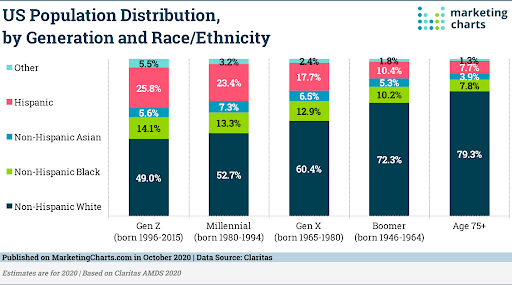
The chart above, created by Marketing Charts from Claritas data, shows the diversity percentages across generations using population data from 2020. The population 75 years old and older has a majority of the non-Hispanic white population, making up 79.3% of the population. As we look at each generational group decreasing in age, the non-Hispanic white percentage of the population decreases to 49.0% in the youngest generation.
In Gen Z, the “minorities” have become the majority of the population. This means that the differing cultures that were once rare are becoming more abundant. Even the most abundant heritage is no longer held by a majority of that generation. With this continued growth in diversity through generations, the majority of the population does not have one centralized or similar culture or heritage. Being aware and making everything available for diverse cultural backgrounds will be key to curbing the market and accommodating the next generation in senior living housing and the industry as a whole.

From the silent generation with 7.8% to the Gen Z generation at 14.1%, the non-Hispanic black portion of the population has doubled from the oldest generation to the youngest for the 2020 data. This rapid increase is an excellent example of the changing demographics and preferences of the population. However, it is not even the most drastic increase. The Hispanic population makes up only 7.7% of the population among people 75 years of age and older, but is 25.8% of Gen Z.
This growing amount of diversity only solidifies the push and driving force for change and expanded options needed for the senior living industry, and the economy as a whole. If options stay limited in what is available, those who anticipate these changes and offer what the incoming generations are asking for will easily grow their market share.
Wealth Distributions by Race
So, our population is becoming more diverse and will want more options and variation to fit their multicultural background and preferences. But can they afford it? Is the ROI worth the hassle?
The short answer, yes, it is.
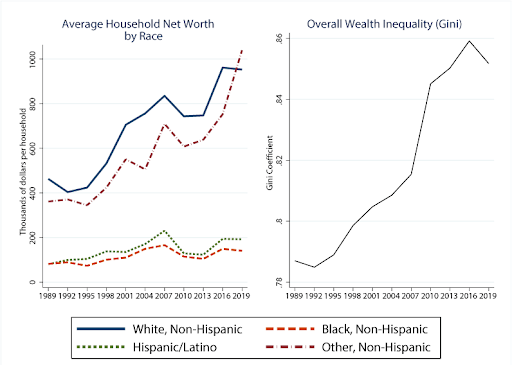
Based on the FEDS notes from October 2021, the average household net worth, adjusted for inflation, of the population has increased over the past few decades. Although the wage gap between the non-Hispanic white population and the Hispanic/Latino or non-Hispanic black populations has only widened, this doesn’t necessarily mean that accommodating their changing preferences would be a loss.
The most notable part of this graph is the “Other, Non-Hispanic” population. We need to keep in mind that this encompasses so many different races, including everyone who has more than 1 race, and therefore a multicultural background. If we follow this path, it has become the highest average household net worth, even surpassing the non-Hispanic white population.
With this new diverse population growing in quantity but also in average household net worth, following the money is the best course of action. The highest household net worth is one and the same as the group with the most diverse racial background.

How Does this Affect the Senior Living Industry?
If you’re a professional in the senior industry, you know our industry is slow to change. No, not just slow. It’s almost stagnant in its forward progression, but that is an opportunity.
Why, you ask? Because that means you can curb the market and be the Xerox of senior living. Do market studies and see for yourself what the incoming generations are asking for, and give it to them. They have the money, and they are more than willing to pay for your differentiated product that is tailored to their wants and needs. Keeping up with the preferences of the next generation allows you to be a pioneer in an industry that is slow to change.
Still not sure of which direction to go or your next steps? Set up a call with us today, and let’s talk about a plan to help you build for your target market and reap the benefits from the incoming aging population.
This is part of the economic mini-series written by Amanda Barnett.